Dentures
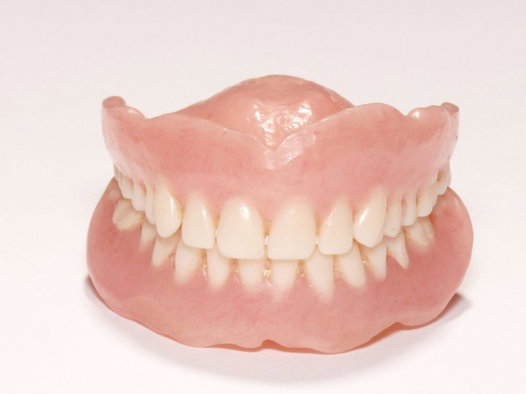
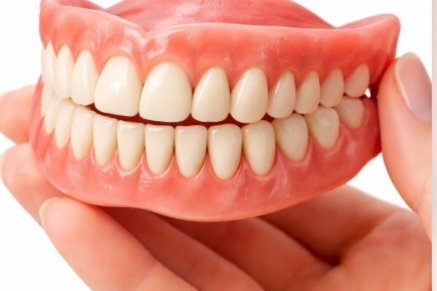
A denture or a complete denture as it is often called, is an appliance that is inserted in the mouth, replaces natural teeth and provides support for the cheeks and lips.
Most Dentures Are Made Of Acrylic And Can Be Fabricated Two Different Ways
- A conventional denture is made after all teeth have been extracted and the tissues (gums) have healed.
- An immediate denture is fabricated and inserted immediately after the teeth are extracted and the tissues are allowed to heal under the denture.
- An upper denture has acrylic, usually flesh colored, that covers the palate (roof of the mouth).
- A lower denture is shaped like a horseshoe to leave room for the tongue.
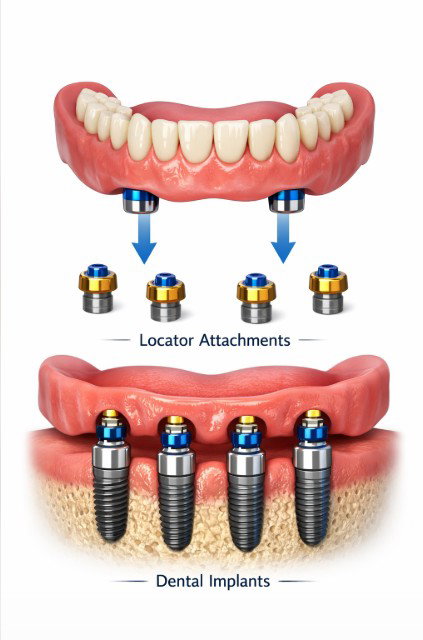
The teeth are made of plastic, porcelain or a combination thereof. Dentures can be fabricated to fit over endodontically treated teeth and a complete denture can be attached to dental implants to allow for a more secure fit of the appliance.
Dentures over a normal course of time will wear and need to be replaced or relined in order to keep the jaw alignment normal. The alignment will slowly change as the bone and gum ridges recede or shrink due to the extraction of the teeth. Regular dental examinations are still important for the denture wearer so that the oral tissues can be checked for disease or change.
The process of getting dentures requires several appointments, usually over several weeks. Highly accurate impressions (molds) and measurements are taken and used to create your custom denture. Several “try-in” appointments may be necessary to ensure proper shape, color, and fit. At the final appointment, your dentist will precisely adjust and place the completed denture, ensuring a natural and comfortable fit.
It is normal to experience increased saliva flow, some soreness, and possible speech and chewing difficulty, however this will subside as your muscles and tissues get used to the new dentures.
You will be given care instructions for your new dentures. Proper cleaning of your new dental appliance, good oral hygiene, and regular dental visits will aid in the life of your new dentures.
DENTURE OPTIONS: WHAT’S THE DIFFERENCE?
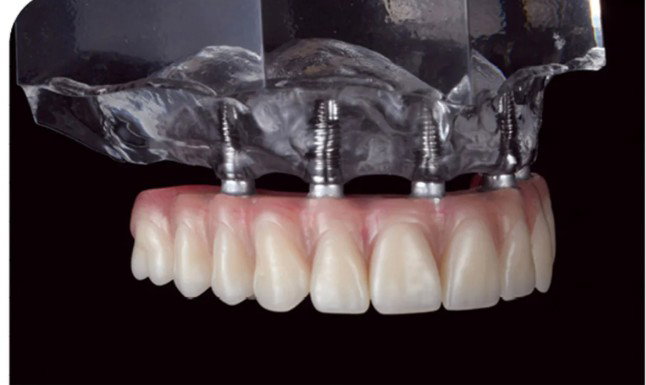
Hybrid Dentures (Fixed / All-on-X style)

Best for patients who want:
- Fixed teeth
- Maximum stability
- “Closest to natural teeth” experience
What patients consistently love:
Feels closest to natural teeth
No movement while eating or talking
Strong bite force (can eat tougher foods)
More confidence socially
👉 Patients often describe them as: “Feels like I got my real teeth back”
Pros
Best stability and chewing power
Most natural feel (no gum pressure)
Better long-term bone preservation
High satisfaction rates
Cons
Higher cost
More implants / surgery required
Requires professional cleaning access
Why:
Because they are permanently fixed to 4–6 implants, giving maximum stability and function.
Overdentures (Removable implant dentures)
What patients consistently love:
More affordable
Easier to clean (remove daily)
Less surgery required
Good improvement over traditional dentures
👉 Patients often say: “Way better than regular dentures, but still feels like a denture”
➡️ Best for patients who want:
Lower cost
Removable option
Easier cleaning
Why:
They snap onto implants but are still removable, so some movement can occur
Pros
Lower cost upfront
Easier hygiene (remove nightly)
Fewer implants needed
Good improvement vs traditional dentures
Cons
Some movement when chewing
Can feel bulky or less natural
May cause gum pressure or sore spots
Hybrid Dentures (Fixed)
- Feel Closest to natural teeth
- Stability Fully fixed – no movement
- Function Strong bite, eat most foods
- Comfort No gum pressure
- Cleaning Cleaned like natural teeth
- Best For Maximum comfort & performance