Treatment options
- Laser Pocket Disinfection
For selected gum concerns - LANAP®
For periodontal disease - LAPIP®
For implant complications
IMPORTANT OFFICE UPDATE: Beginning August 10, 2026, all appointments will take place at our newly combined office. Please use the correct entrance for your appointment.
Learn MoreLANAP® LASER GUM TREATMENT
Advanced, minimally invasive laser treatment for gum disease with Dr. Larry Napolitano in Milpitas. If you are worried about losing a tooth, we aim to help you save your natural teeth.
Benefits
TREATMENT GOAL
Healthier Gums. Stronger Smiles. Our goal with LANAP® laser gum treatment is to help you keep your own teeth, using a minimally invasive approach with Dr. Larry Napolitano.
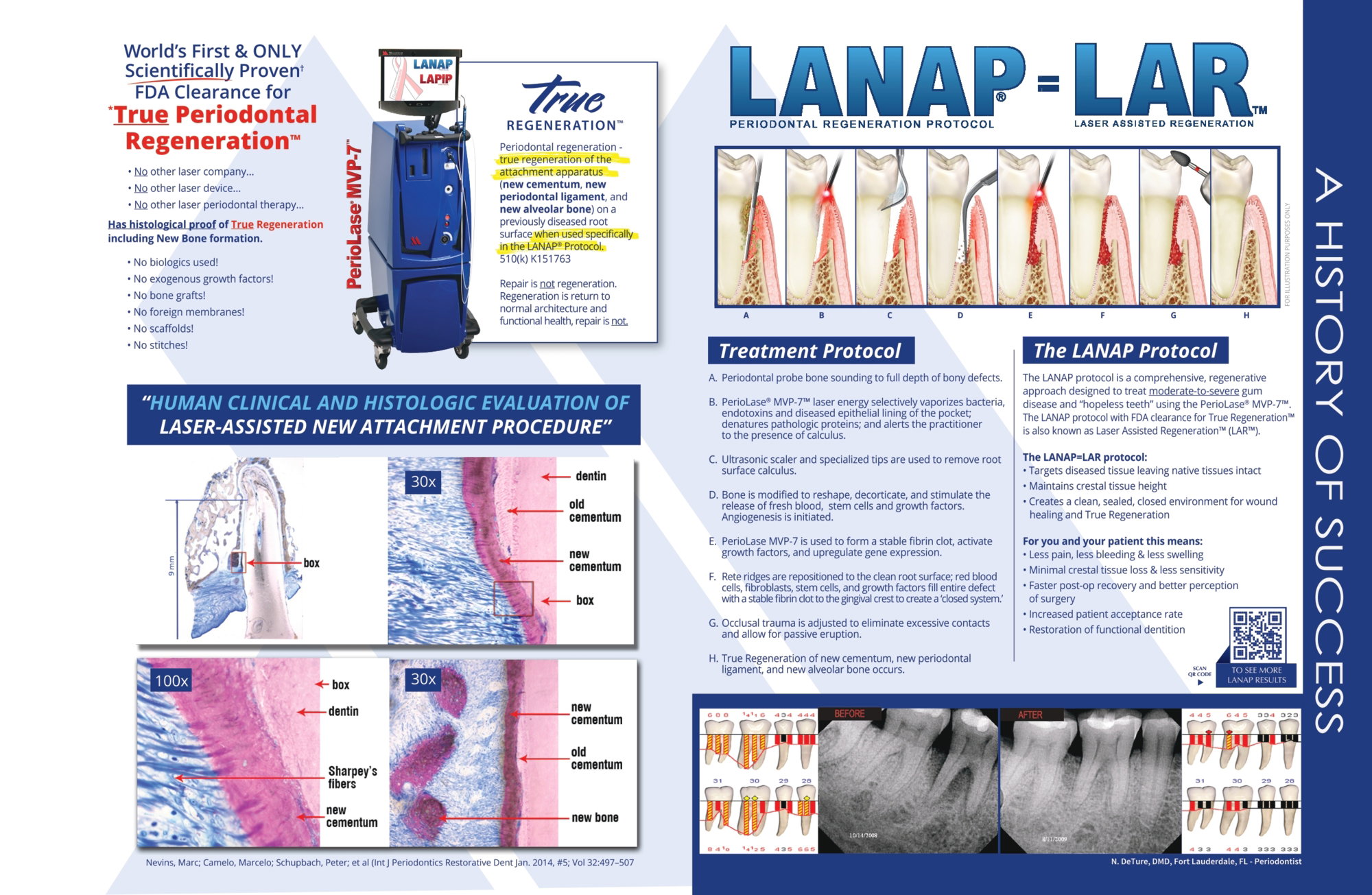
LANAP® stands for Laser-Assisted New Attachment Procedure. It is a laser-based protocol used to treat periodontal (gum) disease, and it is one option among several.
Gum disease occurs when harmful bacteria build up beneath the gumline and cause inflammation and damage to the gums and bone that support your teeth. If it is left untreated, it may progress to gum recession, loose teeth, and tooth loss.
LANAP uses a specialized PerioLase® laser to treat tissue within periodontal pockets and reduce bacteria, while aiming to preserve healthy surrounding tissue.
An exam determines whether deep cleaning, laser treatment, surgery, or another approach may be appropriate. LANAP is not right for everyone, and no procedure guarantees that a tooth or implant will be saved.
Educational artwork, not a clinical before-and-after result. Individual results vary.
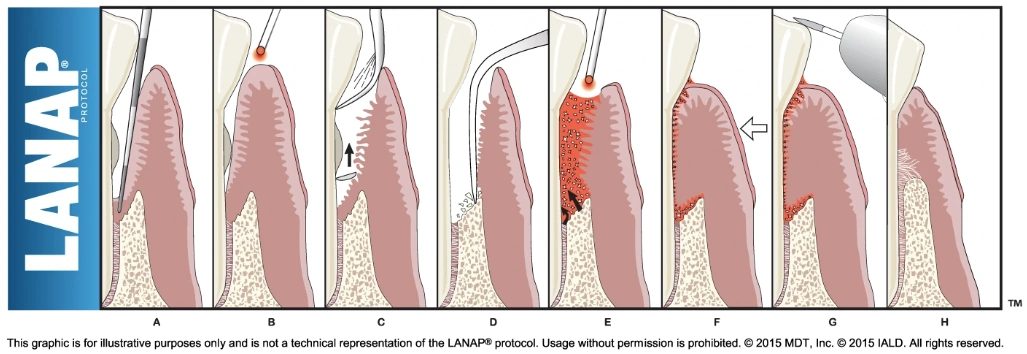
LANAP treats the tissues supporting natural teeth. This simplified diagram illustrates the protocol, not an expected result. Healing varies, and regeneration or preservation is not guaranteed.
Dr. Larry Napolitano examines your gums, measures periodontal pockets, and reviews dental X-rays to assess bone support.
The PerioLase® laser is used as part of the protocol to address diseased tissue and reduce bacteria beneath the gumline.
Specialized instruments remove hardened deposits and bacterial buildup from the root surfaces.
The laser is used again as part of the protocol to support clot formation and tissue healing. Healing and results vary.
This graphic is for illustrative purposes only and is not a technical representation of the LANAP® protocol. Usage without permission is prohibited. © 2015 MDT, Inc. © 2015 IALD. All rights reserved.
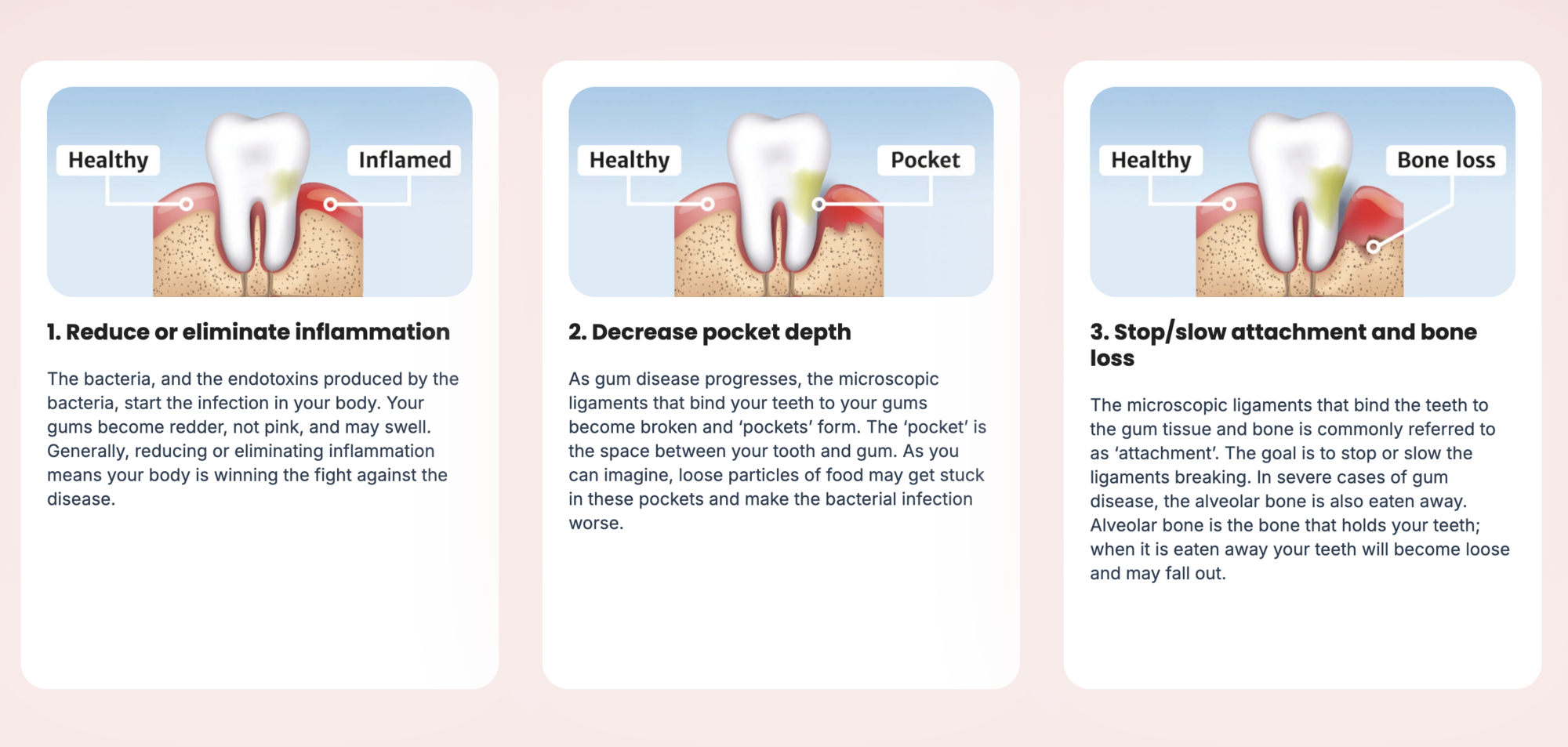
The three goals of gum disease treatment: calm inflammation, reduce pocket depth, and slow or stop attachment and bone loss.
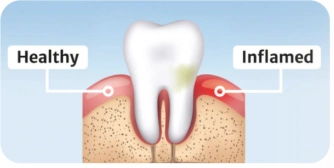
The bacteria, and the endotoxins produced by the bacteria, start the infection in your body. Your gums become redder, not pink, and may swell. Generally, reducing or eliminating inflammation means your body is winning the fight against the disease.
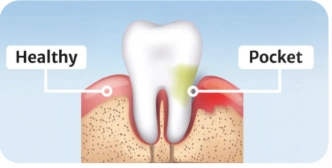
As gum disease progresses, the microscopic ligaments that bind your teeth to your gums become broken and 'pockets' form. The 'pocket' is the space between your tooth and gum. As you can imagine, loose particles of food may get stuck in these pockets and make the bacterial infection worse.
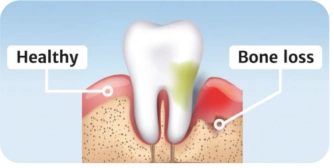
The microscopic ligaments that bind the teeth to the gum tissue and bone are commonly referred to as 'attachment.' The goal is to stop or slow the ligaments breaking. In severe cases of gum disease, the alveolar bone is also eaten away. Alveolar bone is the bone that holds your teeth; when it is eaten away your teeth will become loose and may fall out.
ADVANCED TRAINING. PERSONALIZED CARE.
Your periodontal care begins with a careful evaluation and a clear conversation about which options fit your needs.
Dr. Napolitano is a Fellow of the Institute for Advanced Laser Dentistry, where LANAP training goes beyond the classroom. The year-long program combines hands-on learning with live-patient treatment, culminating in a LANAP proficiency certificate and fellowship upon completion of the final phase.
For you, that means care from a dentist with dedicated, practical training in the LANAP protocol—and a treatment plan built around your individual needs.


A SEPARATE IMPLANT-CARE OPTION
Dr. Napolitano is certified in LAPIP and provides LAPIP laser treatment. The section below explains when an implant-focused evaluation may be appropriate and how LAPIP fits into care.
Gum disease can be quiet at first. If you notice any of these signs, an exam can help identify what's happening beneath the gumline.
Plaque bacteria can irritate the gums. Without effective daily cleaning and professional care, inflammation may affect the supporting tissues around teeth. Smoking, some health conditions and medicines, and individual risk factors can also influence gum health.
Arrange a dental visit for persistent bleeding, swelling, gum recession, or changes in how your teeth fit together. Pus, increasing pain, or a loose tooth should be assessed promptly. Symptoms alone cannot determine the stage; a clinician may measure gum pockets and review X-rays.
OPTIONAL CLEANING ADJUNCT
LPD uses a dental laser to help reduce bacteria within periodontal pockets. This short, optional treatment typically takes about 10 minutes and may be offered alongside a professional cleaning. It is distinct from LANAP and does not replace a needed deep cleaning or comprehensive periodontal treatment. Results vary; additional benefits beyond conventional care are not guaranteed.
LPD is generally not covered by dental insurance. The team will discuss the fee, whether it may be appropriate, and obtain your consent before treatment. It does not replace routine cleanings.
Current fee
First site $55 · Each additional site $25
These supplied educational illustrations simplify how laser light interacts with tissue and bacteria. LPD is an optional cleaning adjunct—not the LANAP protocol for advanced gum disease.
Tissue response depends on the laser, settings, and clinical technique. This illustration does not mean healthy tissue can never be affected.
The clinical goal is bacterial reduction—not complete elimination of bacteria, toxins, or infection. Additional benefits beyond conventional care are not guaranteed.
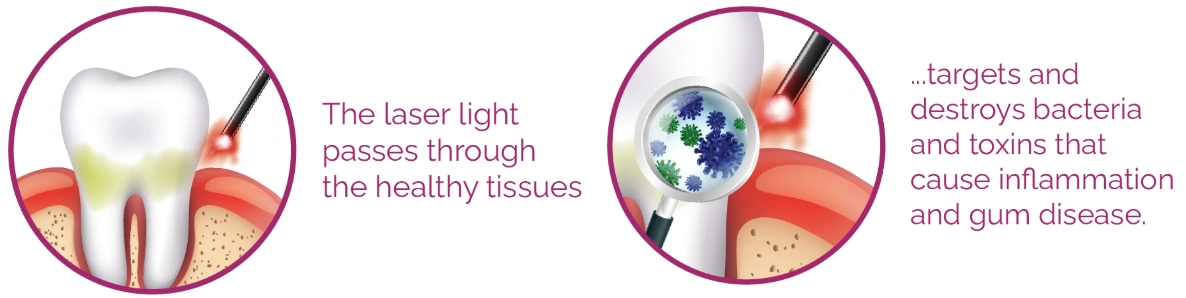
The laser light passes through the healthy tissues
...targets and destroys bacteria and toxins that cause inflammation and gum disease.
Watch this educational overview. Your dentist can evaluate your gums and explain what your individual symptoms may mean.
Having one of these signs does not confirm advanced gum disease. Deep pockets or bone loss may not be obvious at home; your dentist can measure pocket depth and use X-rays to assess bone support.
TREATMENT OPTIONS
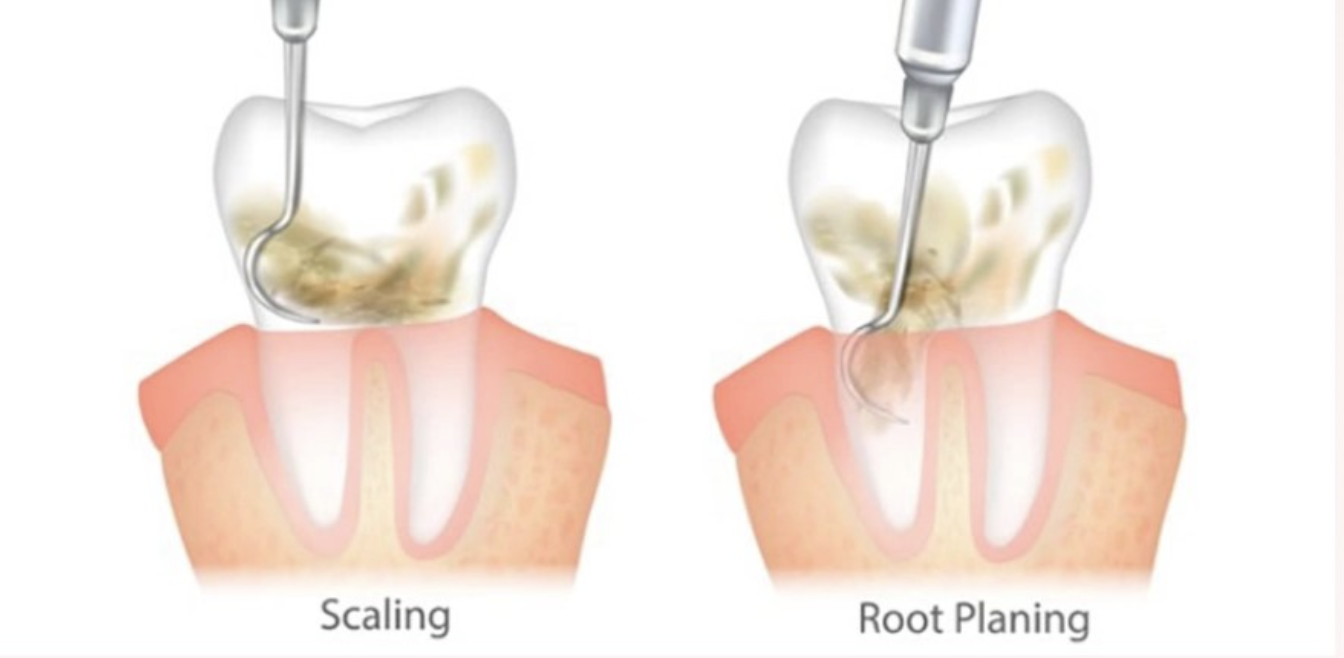
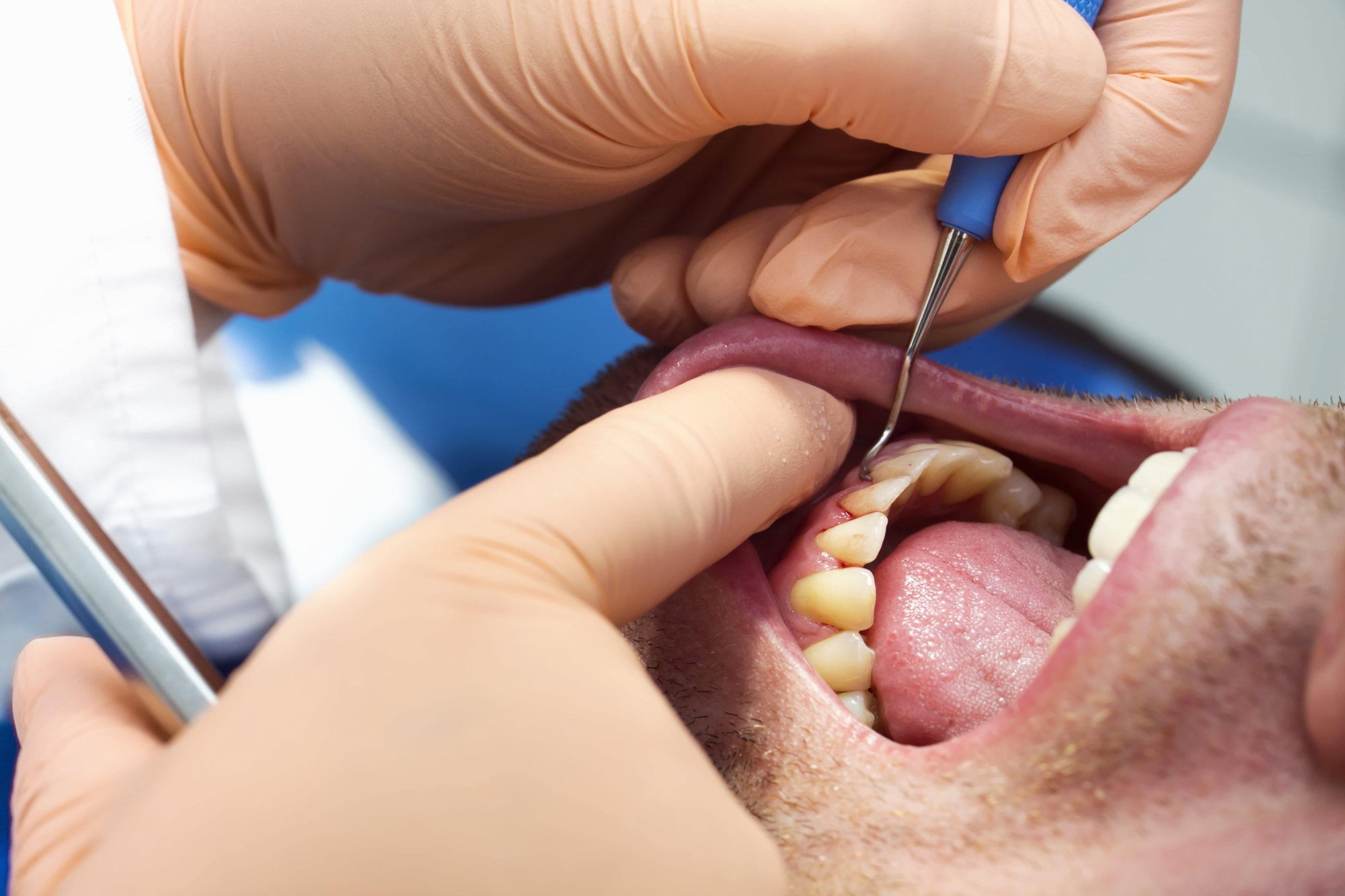
During scaling and root planing (SRP), your dental team uses hand or ultrasonic instruments to remove plaque and tartar (calculus) below the gumline and clean the root surfaces. Your dentist may recommend an antibacterial gel or prescribe a rinse when appropriate.
SRP is a well-established nonsurgical treatment for periodontitis that helps reduce bacteria and gum inflammation.
Temporary discomfort or tooth sensitivity may occur. SRP reduces bacteria but does not guarantee that gum disease is fully controlled. Follow-up assessment helps determine whether additional periodontal treatment is needed.
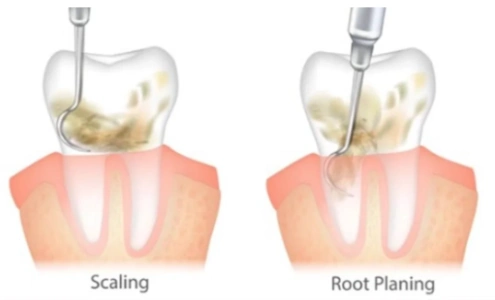
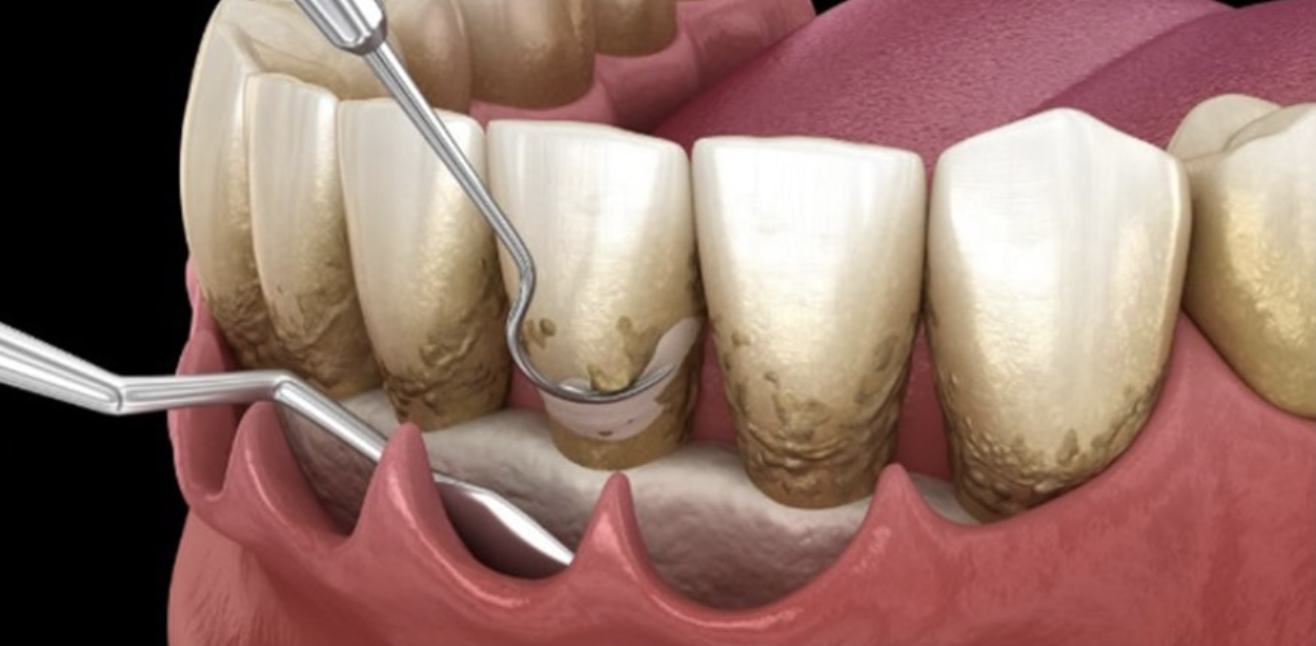
Scaling removes plaque and tartar deposits; root planing cleans the affected root surfaces beneath the gums.
LANAP BENEFITS AND LIMITATIONS
EDUCATIONAL EXAMPLES · INDIVIDUAL RESULTS VARY
Review recovery precautions and when to contact the office. Read about FDA clearance, regeneration, and the clinical evidence in the FAQ.
If you are concerned about gum disease, schedule a periodontal evaluation to learn whether LANAP may be appropriate for you.
These supplied comparisons show pre-operative and follow-up X-rays at the intervals labeled in the images. They illustrate individual examples, not typical or guaranteed results.
X-rays alone do not establish periodontal regeneration or predict your outcome. Your dentist interprets them alongside an examination and gum measurements. These examples do not guarantee bone regrowth, tooth preservation, or freedom from further treatment.
Image credit: Millennium Dental Technologies, Inc., as shown in the original watermarks. These educational images are not presented as cases treated by Dr. Napolitano.
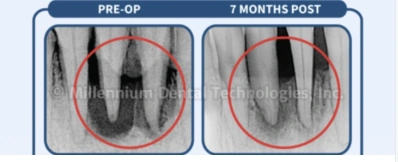
PRE-OP
7 MONTHS POST
Left: before treatment. Right: 7 months afterward, as labeled in the supplied image.
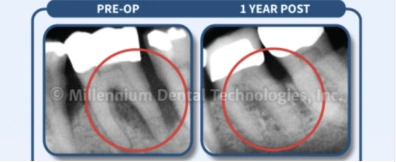
PRE-OP
1 YEAR POST
Left: before treatment. Right: 1 year afterward, as labeled in the supplied image.
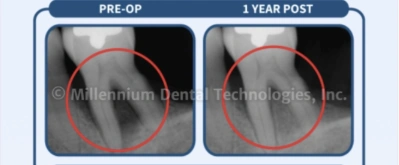
PRE-OP
1 YEAR POST
Left: before treatment. Right: 1 year afterward, as labeled in the supplied image.
Neither is best for everyone. Your exam findings, bone support, and goals guide the choice.
| Compare | LANAP | Traditional gum surgery |
|---|---|---|
| What it involves | A laser and instruments are used to treat periodontal pockets. Traditional scalpel incisions and sutures are typically not required. | Depending on the procedure, the gums may be opened with incisions so the dentist can access the roots or address bone. Sutures may be used. |
| Pain and comfort | Local anesthesia is typically used. Soreness, swelling, bleeding, or tooth sensitivity can occur. Less pain or faster recovery is not guaranteed. | Local anesthesia is typically used. Soreness, swelling, bleeding, or tooth sensitivity can occur during healing; experiences vary. |
| Recovery | Healing time and home-care instructions depend on the treatment plan and individual response. Ask what to expect in your case. | Recovery depends on the procedure and individual response. Your dentist will explain eating, cleaning, and follow-up instructions. |
| Effectiveness | May be appropriate for some patients after an exam. Results depend on the disease and ongoing care. | May be appropriate when the exam indicates a need for surgical access or another procedure. Results depend on the disease and ongoing care. |
| Cost and insurance | Cost depends on the treatment needed, provider fees, and insurance coverage. Request a written estimate and check your benefits. | Cost depends on the procedure, provider fees, and insurance coverage. Request a written estimate and check your benefits. |
| Could it avoid traditional surgery? | It may be an alternative for some patients, but it cannot guarantee that surgery or other treatment will not be needed. | It may be recommended when it best fits the exam findings or when another approach is needed. |
Dr. Napolitano can review your oral health, bone support, and goals before recommending care. No procedure guarantees tooth preservation or bone regrowth.
LANAP typically avoids traditional scalpel incisions and sutures. These English and Spanish graphics describe that usual approach. Their “no fear” slogan is not a promise of pain-free or risk-free care: soreness, bleeding, swelling, and other complications can occur.

Advanced Laser Technology Designed for Precise Gum Disease Treatment
The PerioLase® laser used in LANAP® treatment is designed to interact with specific components of gum tissue, including pigments found in blood and inflamed tissues.
Unlike lasers that primarily target water, the PerioLase uses a specialized wavelength of light delivered in controlled pulses. This allows Dr. Larry Napolitano to treat diseased gum tissue while working to preserve as much healthy surrounding tissue as possible.
Published human studies have examined both gum-health measurements and healing tissue. They offer useful evidence, but each has limits.
Research on laser gum treatment is still developing, and we’ll explain what it can and can’t do for you.
Study PDFs are hosted by Millennium Dental Technologies, the device manufacturer. Some cited studies report manufacturer funding or author relationships; the papers describe these disclosures.
The clinical follow-up studies above are additional evidence. The 2022 study was published after the 2016 clearance.
These studies do not establish that LANAP is broadly superior to conventional periodontal treatment. Your evaluation and treatment options matter more than a promise of a particular result.
For a professional perspective on the debate: Farran (2025), professional commentary (article). This is commentary, not a clinical trial.
A small prospective study followed eight patients for nine months and reported improvements in average gum-pocket depth and gum attachment measurements. It was not a randomized comparison with conventional treatment.
A review of 22 consecutive patients reported improved pocket depths and other gum-health measures at 12–18 months. This was a retrospective case series—a look back at patient records—not a randomized trial.
Studies published in the International Journal of Periodontics & Restorative Dentistry examined treated tissue under a microscope and documented new attachment and, in some sites, periodontal regeneration. The FDA’s 2016 PerioLase clearance summary describes nine-month human tissue-study findings. Clearance applies to the device’s specified uses; it is not FDA approval or a guarantee that every patient will regrow lost bone.
At Your New Dentist, Dr. Larry Napolitano is certified in the LANAP® and LAPIP® laser protocols and has been performing these treatments since August 2025. He has practiced dentistry since 1984.
Dr. Napolitano evaluates each patient’s gum health, bone support, and individual treatment needs to determine whether laser periodontal treatment is appropriate.
Schedule a consultation to learn whether LANAP laser gum treatment may be right for you.
BEYOND GUM AND IMPLANT TREATMENT
Selected soft-tissue procedures are distinct from LANAP for gum disease, LAPIP for tissues around implants, and supplemental LPD. Ask which services are available and appropriate for your needs.
Have a bump in your mouth that keeps getting in the way?
A fibroma is a smooth, firm, benign bump of tissue, most often on the cheek, lip, or tongue. Oral irritation fibromas commonly form where tissue has been repeatedly irritated, such as by cheek biting, a rough edge, or an ill-fitting denture. The bump may persist and keep getting bitten. Removal is often a short procedure; traditional scalpel surgery and laser removal are two options. An examination and diagnosis come first, because other growths can look similar and not every bump is suitable for laser removal.
Whether removed with a laser or another technique, the tissue should be sent to a pathology laboratory for analysis to confirm the diagnosis. A growth should not be assumed to be a harmless fibroma based on appearance alone.
Healing may take about one to two weeks, but can take longer depending on the size and location of the area and your individual healing. Your dentist will explain the expected course and follow-up care.
Content notice: Shows an actual dental procedure and oral tissue removal. Playback does not start automatically.
Open the fibroma removal videoWatch on YouTube (new tab)Video: “Fibroma Removal with PerioLase MVP 7,” published by PerioLase4LANAP. This is third-party educational footage, not presented as a case treated by Dr. Napolitano or a guarantee of a particular result.
A hemangioma is a benign (non-cancerous) growth made of blood vessel cells. Hemangiomas and other vascular lesions in the mouth may appear as soft, bluish-purple or red bumps on the lip, tongue, or cheek. Many are painless, but they can bleed if bitten or bumped, become irritated by eating or brushing, or cause cosmetic concerns. Similar-looking bumps can have other causes.
For selected vascular lesions, focused laser energy can help coagulate, or seal, small blood vessels within the lesion. This may help reduce the lesion and limit bleeding without traditional scalpel removal. Bleeding can still occur, and other treatments may be needed.
Patients with a diagnosed benign vascular lesion that bleeds, gets bitten or irritated, or causes cosmetic concerns may wish to discuss laser treatment. A less-invasive approach may be an option for selected lesions. Suitability depends on the diagnosis, size, location, and your medical history; observation, another treatment, or specialist care may be more appropriate.
Any new or changing bump in your mouth should be examined by a dentist. Call Dr. Napolitano at (408) 263-6694 to schedule an evaluation.
Content notice: Shows clinical treatment of a lip lesion. Playback does not start automatically.
Open the lip-lesion treatment videoWatch on YouTube (new tab)Video: “Hemangioma Removal with PerioLase Nd:YAG laser,” published by Wesley Haddix (@DrHaddix). This is third-party educational footage, not presented as a case treated by Dr. Napolitano or a guarantee of a particular result.
Dr. Larry Napolitano · Fellow of the Institute for Advanced Laser Dentistry (IALD)
Hemostasis means controlling bleeding. This educational video demonstrates the PerioLase MVP-7 being used for bleeding control during dental care. The appropriate method depends on the procedure and the patient’s medical history; other measures may still be needed.
Hemostasis is discussed here as a separate use of the laser. It does not mean that LANAP or other dental surgery is bloodless.
Questions about laser treatment? Call (408) 263-6694 or request an appointment online.
Content notice: Shows an actual dental procedure and bleeding. Playback does not start automatically.
Open the hemostasis videoWatch on YouTube (new tab)Video: “Hemostasis with the PerioLase MVP-7,” published by PerioLase4LANAP. This is third-party educational footage, not presented as a case treated by Dr. Napolitano or a guarantee of a particular result.
Often, yes. We review your medical history at your consultation and plan your care around your health. Never stop a blood thinner on your own.
Sometimes. It depends on the procedure and how much bleeding occurs, and we'll tell you what to expect ahead of time.
We numb the area first, and most patients find the experience comfortable. Comfort needs vary, and we'll discuss yours before treatment.
Have you or your child been told you need a frenectomy? This video shows how the procedure can be done with a dental laser.
A frenectomy releases or removes a restrictive frenum, a small fold of tissue connecting the tongue or lip to surrounding tissue. A restrictive attachment can limit movement. Speech difficulty, feeding or latching concerns, tooth gaps, and gum recession can have several causes; an evaluation helps determine whether the frenum is contributing and whether treatment is needed.
This video illustrates tissue release with a PerioLase Nd:YAG laser. Local anesthesia may be used for comfort, depending on the patient and treatment plan. Laser treatment generally avoids traditional scalpel incisions. Bleeding may be limited and sutures may not be needed, but discomfort and healing time vary, and complications are possible.
Curious whether laser treatment is right for you? Call Dr. Napolitano to schedule a consultation.
Content notice: Shows an actual dental procedure involving oral tissue. Playback does not start automatically.
Open the laser frenectomy videoWatch on YouTube (new tab)Video: “Frenectomy in Los Angeles with Laser Gum Dentist Periolase,” published by Amir Sanjabi DDS. This is third-party educational footage, not presented as a case treated by Dr. Napolitano or a guarantee of a particular result.
A CLOSER LOOK AT LANAP
Dr. Napolitano will confirm your visit plan and comfort needs. After-treatment eating, cleaning, and follow-up are covered in the Recovery & Home Care Instructions below.
How laser gum treatment works
LANAP uses a dental laser alongside periodontal instruments to treat diseased gum pockets around natural teeth. Your exam guides the treatment plan and goals for preserving tooth support.
Laser energy interacts with specific tissue components.
Treatment aims to limit unnecessary damage to healthy gum tissue.
Part of a periodontal protocol designed to support healing.
Educational illustration of a laser fiber treating tissue inside a periodontal pocket. It is not a photograph of patient treatment or a prediction of results.
Additional treatment information
Hope for Hopeless Teeth™
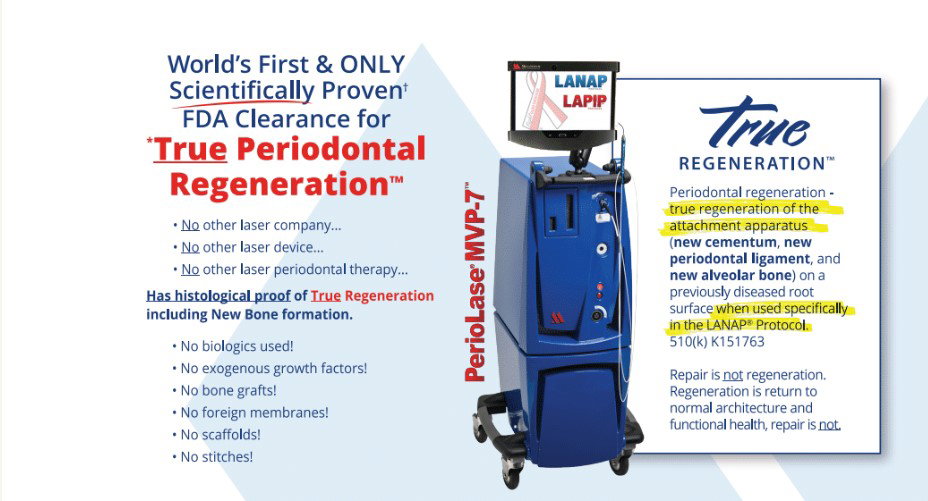
The LANAP® protocol is the world’s first and ONLY dental laser procedure FDA cleared and scientifically proven to regenerate bone and tissues lost to gum disease, helping to save your natural teeth. Compared with traditional surgery, the “no cut, no sew, no fear” LANAP® Protocol is more comfortable with faster recovery and less post-op sensitivity, swelling and gum recession.
LANAP is a paradigm shifting periodontal surgery that we now offer. LANAP stands for Laser Assisted New Attachment Procedure. This is an FDA approved procedure that has been shown to have remarkable benefits in treating periodontal disease. Use of Millennium Dental’s NdYAG Periolase Laser eliminates the need for invasive scalpel surgery and sutures. This new tool uses a very fine fiber that is placed between the tooth and gum. The PerioLase fiber delivers a specific wavelength of energy that reduces the presence of harmful bacteria that live in the pocket between your teeth and gums. The laser also penetrates and kills bacteria that have invaded gum tissue and bone. In addition the laser removes unhealthy tissue without harming healthy tissue. The LANAP protocol has been carefully developed and has been used with great success and improved patient comfort and acceptance for over a decade. The techniques developed for LANAP periodontal surgery can be applied to local areas of gum disease. With the wide range of settings this NdYAG laser is helpful in a myriad of other procedures, both surgical and non-surgical. For example we are able to comfortably use this laser to enhance the value of your routine dental cleanings and periodontal maintenance visits with laser pocket disinfection.
In the early stages of gum disease, you may be offered a Laser Pocket Disinfection or Scaling/root planing (SR/P). SR/P is also commonly called 'deep cleaning.
Laser pocket disinfection (LPD) is a painless, patient-friendly procedure using a dental laser such as the PerioLase MVP-7. If you have gingivitis, LPD can help reverse symptoms. With LPD, laser light passes through the healthy tissues and targets and destroys bacteria and toxins that cause inflammation and gum disease. As a result, gums are healthier. LPD also can be used to treat patients as part of a perio-maintenance program.
Generally less painful, and may be more effective at killing bacteria.
Make sure your hygienist/dentist has taken proper education courses and is using the correct dental laser for the procedure. There are multiple types of lasers in dentistry with different uses.
If initial treatment is not successful, or if your gum disease is identified in a later stage, your dentist may recommend gum disease surgery.
In traditional surgery, a periodontist uses a scalpel to cut your gums and fold them back. This allows the doctor to access to the tooth root to clean the target from the tooth and view the alveolar bone. If needed, the bone may be reshaped, and bone graft material is placed in the surgical site. The top of the gums may be cut back to make the pocket less deep and easier to keep clean. The gums are sewn back together. Dental laser is used to kill the bacteria in the pocket. Some states allow hygienists to use lasers, while other states only allow dentists to perform procedures using lasers.
The classic treatment for advanced gum disease, generally done by a specialist with additional years of dental school.
This surgery may cause your gums to recede, exposing more of your tooth root and leading to increased sensitivity.
During SRP, the hygienist uses metal instruments to scrape away the tarter and calculus on the root surface. Depending upon your dentist, an antibacterial gel may be applied, or an antibacterial rinse prescribed.
One of the industry's most commonly accepted ways to treat early gum disease.
Patients may experience discomfort, treatment may not remove bacteria.
Post Operative Instructions for SurgeryRelated guidance: Post-operative instructions
Laser Periodontal Therapy™ is a laser based technique for the treatment of periodontal disease using the Millennium Dental Technologies, Inc., PerioLase Laser. Fear of periodontal treatment vanishes when patients find out no scalpel or sutures will be used. Patient friendly laser treatment gets patients to agree to the treatment they need and continue with the follow-up care that is prescribed.
Our office is one of the first in the area to offer Laser Periodontal Therapy'' for the treatment of gingivitis and/or periodontitis. Following are commonly asked questions about this technology.
Tartar, associated with inflamed and bleeding gums, is removed form the root surface of the tooth using an ultrasonic scaler and small.
Then, a small amount of light energy from a laser is directed through a tiny fiber, which is gently placed between the gum and tooth. This light energy removes a tiny amount of diseased tissue and aids in reducing the bacteria associated with the disease. After the area is thoroughly cleaned, the body can heal the area naturally.
Although the procedure itself can be virtually painless, we may anesthetize the area for the patient's comfort. In this way we can precisely direct the laser for treatment. Post-procedure discomfort is typically minimal and of short duration.
Initial treatment is focused on scaling and the use of small instruments to remove the tartar. Then, the laser portion of the treatment is performed and normally only takes a few minutes. Depending on the severity of the patient's periodontal disease, treatment may be accomplished in one office visit or in multiple visits. The estimated treatment time is reviewed with patients when we discuss their treatment plan.
Typically we use the same billing codes as traditional gum surgery and the laser treatment is generally no more expensive than traditional surgery. There are other factors which may affect the cost, such as the severity of the periodontal disease, and how many teeth are involved. Many insurance plans pay only for a portion of this treatment. Patients should discuss their payment options with the dental office personnel as we offer financing for this treatment.
The dramatically increased comfort for our patients made the new system attractive to our office. We do encourage patients to take care of the need now to reduce further damage to their gums, teeth and bone.
Periodontal regeneration-true regeneration of the attachment apparatus (new cementum, new periodontal ligament, and new alveolar bone) on a previously diseased root surface when used specifically in the LANAP Protocol.
The LAPIP protocol is a minimally-invasive approach to treating ailing and failing dental implants.
The LAPIP protocol utilizes the unique PerioLase® MVP-7™, a Nd:YAG free running pulsed laser requiring specific knowledge and skills derivative of the LANAP protocol.
To you, the patient, this means:
The LAPIP protocol:
• Allows removal of diseased tissue without removing any of the healthy tissue
• Eliminates the infection
• Helps maintain the height of the tissue around implants
• Minimizes pain and discomfort to the patient
• Closes the periodontal pocket wound to allow healing to take place
The LAPIP protocol is a no-risk first line treatment that preserves other treatment options. Controlling peri-implant disease makes it possible to save and protect your implant investment.
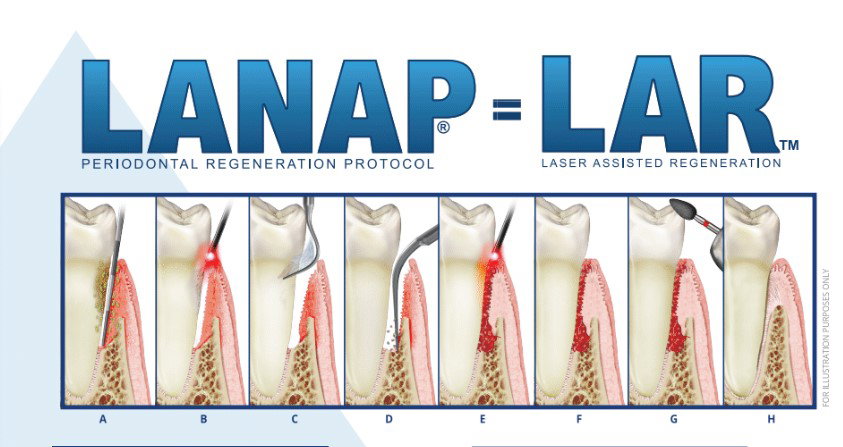
A) Periodontal probe indicates excessive pocket depth
B) PerioLase® MVP-7™ laser energy selectively vaporizes bacteria, endotoxins, and diseased tissues; and removes titanium corrosion contaminants in soft tissue around implant
C) Ultrasonic scaler tips remove debris from implant
D) Bone is modified to release stem cells
E) PerioLase MVP-7 finishes cleaning pocket, stimulates natural growth factors, and aids in sealing pocket closed so new germs cannot enter
F) Healing of gums to clean surface occurs
G) Bite trauma is adjusted
H) Regeneration of bone around implant