
TOOTH-BORNE
Supported mainly by teeth
A conventional expander rests on teeth to apply force across the upper arch.
IMPORTANT OFFICE UPDATE: Beginning August 10, 2026, all appointments will take place at our newly combined office. Please use the correct entrance for your appointment.
Learn MoreMARPE · ADVANCED PALATAL EXPANSION IN MILPITAS
For selected patients, MARPE may help widen a narrow upper jaw and create space for healthier tooth alignment. Here’s how it works, what a thoughtful evaluation involves, and what to ask along the way.
For teens, adults, and the people who care for them.
FIRST, THE PLAIN-LANGUAGE VERSION
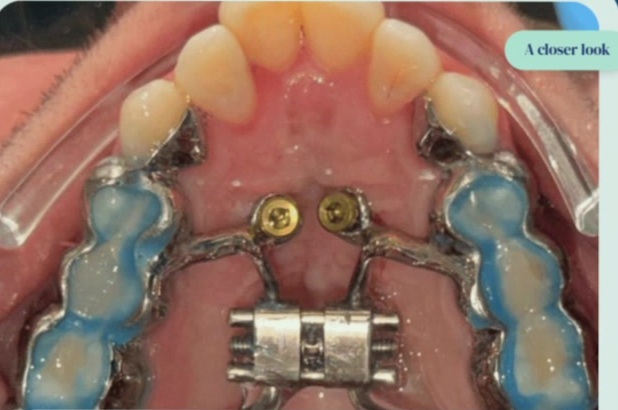
MARPE stands for miniscrew-assisted rapid palatal expansion. It is a minimally invasive, nonsurgical approach that uses a specialized expander in the roof of the mouth, supported by small temporary anchorage screws in the palate, to apply expansion force to the upper jaw. Miniscrew placement is a clinical procedure; ask about its risks, benefits, and alternatives.
It differs from a traditional tooth-borne expander, which is supported mainly by the teeth. MARPE is designed to provide more skeletal support—but that does not make it right for every person or remove the need for careful planning.
See what candidacy involvesAT A GLANCE
TOOTH-BORNE
A conventional expander rests on teeth to apply force across the upper arch.
MARPE
Palatal anchorage can direct more force toward the upper jaw. Individual anatomy and response matter.
Simplified illustration for explanation only. It is not a diagnostic image or a promise of treatment outcome.
A SIDE-BY-SIDE OVERVIEW
Both approaches address upper-jaw width in selected cases, but they use different anchorage and are considered for different clinical situations.
| Feature | Traditional expander | MARPE |
|---|---|---|
| Anchorage | Primarily teeth | Palatal bone, sometimes with dental support |
| Primary goal | Upper-arch expansion | Greater emphasis on skeletal expansion |
| Common candidates | Growing patients, when clinically indicated | Selected adolescents and adults after evaluation |
| Mini-implants | Usually not needed | Temporary miniscrews are part of the MARPE approach |
| Planning | Clinical evaluation; imaging as needed | Detailed skeletal and anchorage assessment; imaging when clinically indicated |
| Results | Depend on anatomy, growth, and skeletal maturity | Depend on anatomy and suture response; expansion is not guaranteed |
This comparison is a general overview, not a treatment recommendation. Appliance design and expected response vary by patient.
THE BIOLOGY BEHIND EXPANSION
The midpalatal suture is a fibrous connection between the right and left sides of the upper jaw, or maxilla. As a person matures, it may become more interlocked and, in some people, partly or extensively fused. These changes can make conventional tooth-borne expansion less predictable, but the timing and degree vary from person to person.
MARPE applies controlled forces intended to separate the two sides of the upper jaw at this suture. Skeletal expansion is not guaranteed; individual anatomy and response matter.
MIDLINE
Growing jaw
MATURATION
Maturation varies
INTERLOCKING
May be more interlocked
Original educational schematic—not a diagnostic image or a prediction of an individual’s anatomy. Suture maturation varies between people and is not determined by age alone.
GROWTH STAGE 01
While the jaw is growing, the midpalatal suture generally offers less resistance, so conventional palatal expansion may be effective for appropriate cases.
GROWTH STAGE 02
Skeletal maturation varies from person to person. Treatment selection depends on individual anatomy and development, not age alone.
SELECTED PATIENTS
The suture may be more interlocked or partly fused, which can make conventional expansion less predictable. MARPE may be an option for selected patients.
This overview is educational. The midpalatal suture and treatment options can only be assessed in the context of an individual clinical evaluation.
A CUSTOM-DESIGNED SYSTEM
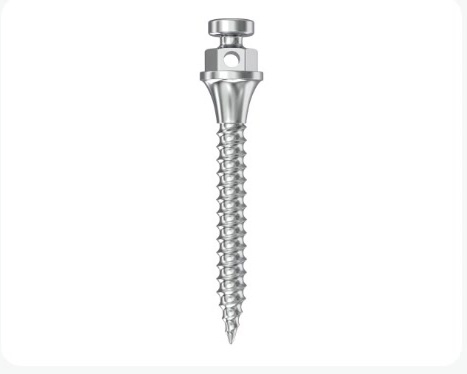
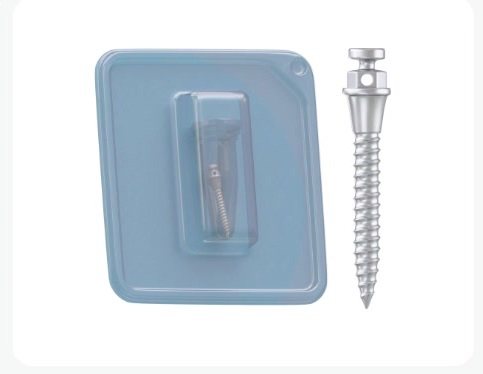
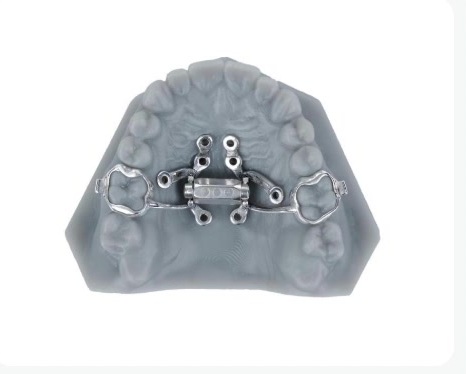
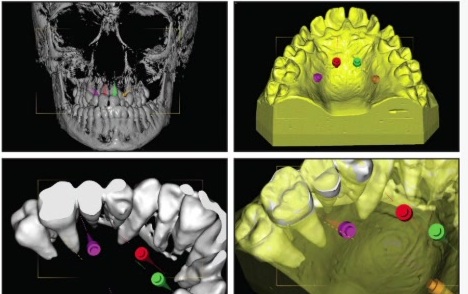
For appropriately selected patients, Dr. Larry Napolitano uses the Great Lakes Custom MARPE system. Temporary anchorage devices (TADs), often called mini-implants, support the expander from the palatal bone rather than relying only on the teeth. They are orthodontic anchors—not implants that replace missing teeth—and are removed when no longer needed.
HOW THE SUPPORT IS DESIGNED
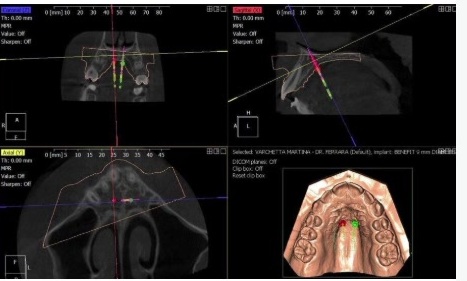
The TAD has a head that connects to the appliance, a neck that passes through soft tissue, and a threaded body anchored in palatal bone. Great Lakes technicians collaborate on appliance design, and the anchorage configuration can vary with the patient’s anatomy and prescription.
Great Lakes describes CBCT assessment and verification as part of its Custom MARPE workflow. The scans and digital plan help evaluate palatal anatomy and guide placement; the clinician will discuss the purpose of imaging for your treatment plan.
Great Lakes Custom MARPE informationProduct and planning images are provided for education. Appliance design, number and position of anchors, imaging, and clinical steps are selected for each patient.
A QUESTION WORTH ASKING
A narrow upper jaw can be one part of a bite concern. MARPE may be considered in some cases—not as a one-size-fits-all fix, but as a possible step in an individualized orthodontic plan.
01
When the upper jaw is relatively narrow, a clinician may consider whether expansion could be part of a broader plan.
02
Some upper back teeth may bite inside the lower teeth. Jaw width is one factor that can contribute.
03
In selected cases, arch width may be considered as part of planning for crowding or later tooth alignment.
04
A clinician may consider how the upper and lower jaw widths relate when evaluating your bite.
05
Expansion may be one stage before braces or clear aligners when an exam supports that sequence.
These are examples of concerns a clinician may assess. The presence of a concern does not automatically mean MARPE is the right treatment.
CANDIDACY IS PERSONAL
MARPE may be considered for older teens and selected adults with a narrow upper jaw. No age or symptom alone can determine whether it is appropriate.
Dr. Napolitano’s evaluation may consider skeletal maturity and midpalatal suture characteristics, upper-jaw width and crossbite relationships, palatal bone anatomy, dental and periodontal health, and your treatment goals.
Diagnostic imaging helps guide planning. CBCT may be considered when clinically indicated; imaging choices depend on your individual evaluation.
FROM FIRST QUESTIONS TO FOLLOW-UP
Each phase has a purpose. Your exact timeline and sequence depend on your evaluation and how treatment progresses.
01/05
We listen to what you have noticed, what you hope to change, and any questions you or your family have.
02/05
Dr. Napolitano evaluates your bite and oral health. Appropriate imaging helps assess your anatomy and whether expansion may be suitable.
03/05
Appropriate imaging and measurements help guide a plan. We discuss potential benefits, risks, and the treatment sequence before you decide how to proceed.
04/05
If MARPE is selected, the appliance and temporary anchorage miniscrews are placed, then activated only as directed and monitored.
05/05
The appliance may remain in place for a prescribed stabilization period. Braces or aligners may be considered afterward for tooth alignment.
Treatment steps are illustrative. Timing, appliance design, activation instructions, and the need for further alignment vary by patient.
FURTHER READING
These peer-reviewed reviews discuss midpalatal suture maturation and MARPE in groups of patients. Study methods and populations differ, so the findings support careful, individualized assessment—not a prediction or promise of expansion for any one person.
REFERENCE 01
Shayani A, et al. Diagnostics. 2022;12(11):2774.
View publicationREFERENCE 02
Kapetanović A, et al. European Journal of Orthodontics. 2021;43(3):313–323.
View publicationREFERENCE 03
Zeng W, et al. BMC Oral Health. 2023;23:829. PMID: 37924088.
View publicationReferences are provided for patient education and are not a substitute for an individualized consultation.
GOOD TO KNOW
There is a lot to take in. These answers are a starting point—not a substitute for an exam and a conversation about your specific needs.
Ask us in personMARPE means miniscrew-assisted rapid palatal expansion. It is an approach to expanding the upper jaw using an appliance supported by small temporary anchorage screws in the palate.
A conventional tooth-borne expander is supported mainly by teeth. MARPE uses miniscrews in the palate for additional skeletal support, with the goal of directing more expansion force to the upper jaw. Which approach is appropriate depends on the individual exam.
Some adults may be candidates, but age, skeletal maturity, jaw and palate anatomy, gum health, bite, and imaging all matter. In some adults, surgically assisted expansion may be considered instead. An examination and imaging are needed to discuss options.
No. These concerns can have different causes and may be addressed in different ways. MARPE is not appropriate or necessary for everyone; a clinician evaluates the full bite and oral health before recommending treatment.
No treatment can guarantee a particular outcome. Response, comfort, treatment sequence, and results vary. Your clinician can explain what is known about your case, the uncertainties, alternatives, and when the plan may need to change.
Dr. Napolitano is a general dentist who provides orthodontic treatment, including MARPE. He is not an orthodontic specialist. At your visit, he can discuss whether your needs are appropriate for treatment here and what options may fit your case.
CARE IN YOUR NEIGHBORHOOD
Dr. Napolitano is a general dentist providing orthodontic treatment, including MARPE. A visit is a chance to ask questions, understand your options, and find out whether an evaluation makes sense for you.
Request an appointment